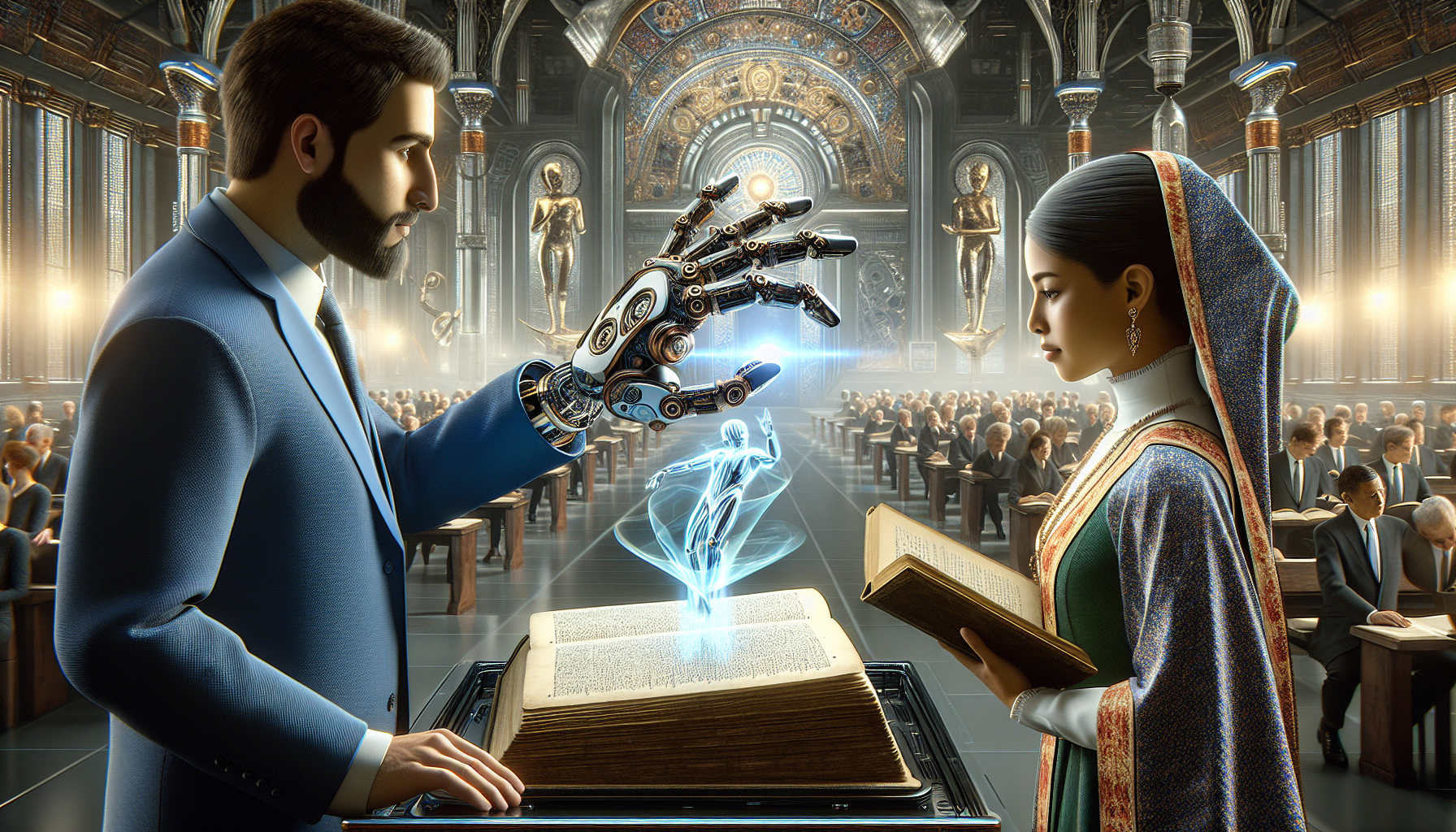
The AI Impact on Education: Are Our Schools Ready for the Future of Work?
Introduction: The Unstoppable Wave of AI in Learning
The educational landscape is at the precipice of a monumental transformation, driven by an force far more disruptive than any technology that came before it: Artificial Intelligence. This isn’t merely about integrating new software or digital whiteboards; it’s the dawn of a new era in learning, demanding an urgent, radical re-evaluation of everything we thought we knew about schooling. The AI Impact on Education is not a distant future threat; it is a present reality, reshaping curricula, pedagogies, and even the fundamental purpose of institutions.
For too long, our educational systems have operated under paradigms designed for an industrial age, preparing students for a world that no longer exists. Now, with AI rapidly advancing, educators, students, and institutions face an existential choice: adapt or become irrelevant. AI is not just a tool to enhance existing practices; it is a catalyst for systemic change, fundamentally altering how knowledge is acquired, processed, and applied. It promises personalized learning experiences, unprecedented access to information, and analytical capabilities that dwarf human potential. Yet, it also poses profound questions about what it truly means to be educated, what skills truly matter, and how we will prepare the next generation for a future where human-machine collaboration is the norm. This deep dive will offer an unflinching look at the challenges and opportunities, pushing us to ask if our schools are truly ready for the impending seismic shift.
Obsolete Education Models: Why Traditional Learning is Falling Behind
Consider the current educational paradigm: standardized tests, rote memorization, rigid curricula, and a one-size-fits-all approach. This model, a relic of the industrial revolution, was designed to produce cogs for the machine, not nimble, critical thinkers ready for an exponentially evolving world. These obsolete education models are not just struggling; they are failing to prepare students for the demands of an AI-driven future at an alarming rate. They are like a horse-drawn carriage trying to navigate a modern highway – ill-equipped, painfully slow, and ultimately, unable to reach the destination.
The historical context of technology integration in classrooms – from projectors to personal computers – typically involved augmenting existing methods without challenging their core structure. AI, however, presents a fundamentally different challenge. It doesn’t just digitize old processes; it automates, personalizes, and democratizes at a scale previously unimaginable. Our traditional systems, built on scarcity of information and the teacher as the sole dispenser of knowledge, crumble under the weight of AI’s abundance and accessibility. They prioritize content recall over critical thinking, compliance over creativity, and a fixed mindset over continuous learning. As AI takes over routine cognitive tasks, the very skills that our schools traditionally cultivate are becoming less valuable, leaving a widening gap between what is taught and what is needed for a meaningful future. The urgency to dismantle these outdated structures and embrace a truly future-forward vision has never been more critical.
The New Learning Landscape: Trends in AI and Learning
The rumblings of transformation are already reverberating through classrooms and learning platforms globally. AI and learning are converging in innovative ways, moving beyond mere experimentation into practical application. We’re seeing AI integrated for highly personalized learning paths, adapting content and pace to individual student needs, a stark contrast to the traditional uniform approach. Automated grading systems free up educators’ time, allowing them to focus on deeper pedagogical interactions rather than administrative burdens. The landscape is also witnessing the rise of novel approaches, such as \”microschools\” and the rapid development of new \”ed-tech tools,\” often pioneered by tech industry leaders and venture capitalists seeking to rethink education from the ground up [1].
Teachers, far from being replaced, are creatively harnessing AI to enhance their educational practices. As highlighted by WIRED’s insights, educators are leveraging AI for everything from generating lesson plans and creating differentiated assignments to providing instant feedback and identifying learning gaps [1]. This isn’t about widespread job loss; rather, it’s a powerful opportunity to shift the conversation from fear to transformation. Dmitry Zaytsev provocatively states, \”AI WON’T KILL JOBS FIRST. IT WILL KILL THE WAY WE EDUCATE FOR THEM\” [2]. This sentiment underscores the profound necessity of equipping students with new skills for the AI age, moving beyond vocational training for obsolete roles and towards adaptable, human-centric competencies that complement, rather than compete with, artificial intelligence. The new learning landscape isn’t about passively observing AI; it’s about actively shaping its role in human development.
Cultivating Future Skills: Curiosity, Creativity, and the Portfolio Economy
In a world increasingly augmented by AI, the human differentiator lies not in what we know, but in how we think, create, and adapt. The essential skills for the AI age extend far beyond technical proficiency; they encompass critical thinking, complex problem-solving, emotional intelligence, and, crucially, creativity. We must foster a profound sense of curiosity in education, moving away from the industrial model of rote memorization towards intrinsic motivation and inquiry-based learning. Students must be encouraged to ask the \”why\” and \”what if,\” to explore uncharted territories of knowledge, and to develop an insatiable thirst for continuous learning that transcends formal schooling. This is about cultivating agile minds capable of navigating ambiguity and thriving amidst constant change.
The very concept of credentialing is also undergoing a radical re-evaluation. The traditional \”paper chase\” of a diploma is losing its currency in a world that values demonstrable ability over mere certification. The shift towards a portfolio vs diploma economy is undeniable, where practical demonstrations of skills, real-world projects, and a robust, evolving portfolio increasingly outweigh traditional academic degrees. Students need to build a verifiable track record of their competencies, showcasing their capacity to innovate, collaborate, and apply knowledge effectively. This transformation also places a critical onus on policymakers to not only safeguard children online, addressing student perceptions of AI and potential ethical pitfalls, but also to reform educational structures to prioritize these vital, future-proof skills. The future workforce won’t just need to use AI; they’ll need to out-think and out-create it where it matters most.
The Future of Work AI: Preparing for a Transformed Workforce
The Future of work AI isn’t a nebulous concept; it’s a rapidly approaching reality that will fundamentally reshape industries, redefine job roles, and alter the very nature of employment. AI won’t just automate tasks; it will create entirely new categories of jobs while making others obsolete, demanding a workforce capable of fluid adaptation and continuous upskilling. This isn’t just a challenge for individuals; it’s a societal imperative. Educational institutions, therefore, must proactively re-evaluate and redesign their methodologies to meet these future demands, shifting their focus from merely imparting knowledge to actively fostering talent identification and development. As Dmitry Zaytsev articulates, the immediate consequence of AI is less about widespread job loss and more about revolutionizing how we educate for jobs [2].
This means moving beyond outdated career paths and embracing a dynamic approach that anticipates future needs. Schools must become agile innovation hubs, collaborating with industry to understand emerging skill gaps and design curricula that are responsive and relevant. The focus must be on cultivating human skills that AI cannot replicate – critical thinking, creative problem-solving, ethical reasoning, and complex communication. The prognosis for career longevity and societal progress in an AI-driven world hinges on continuous learning and adaptation being woven into the fabric of every individual’s journey. Those who embrace this perpetual evolution, seeing learning as a lifelong pursuit rather than a finite phase, will be the architects of tomorrow.
Charting the Course: Your Role in the AI Education Revolution
The profound AI Impact on Education is not a spectator sport. It demands active participation from every stakeholder. Educators must embrace new tools and methodologies, reimagining their roles as facilitators of curiosity and critical thinking, rather than mere disseminators of facts. Parents must advocate for dynamic, future-focused curricula, fostering a growth mindset in their children that values adaptability and resilience. Students themselves must become proactive architects of their own learning, cultivating a hunger for knowledge and skills that transcend the classroom walls.
Policymakers bear a monumental responsibility to create frameworks that support ethical AI integration, ensure equitable access to transformative learning technologies, and champion a radical rethinking of educational standards. This is our collective moment to challenge the status quo, to dismantle obsolete education models, and to build a learning ecosystem that truly prepares the next generation for the Future of work AI. We must engage with new technologies, champion adaptive learning strategies, and foster an environment where curiosity in education thrives and skills like creativity and critical thinking are paramount. Let this be a call to reflection and discussion, urging us all to actively shape a resilient, equitable, and relevant educational system that can not only weather the AI era but truly flourish within it.
For further insights and community involvement, explore resources from leading publications like WIRED [1] and thought leaders on platforms such as Hackernoon [2], who are continually examining the evolving intersection of AI and our daily lives. Your voice, your engagement, and your vision are crucial in charting a positive course for the AI education revolution.
—
Citations:
[1] WIRED. (2025, August 28). What Happened at Our Livestream on Back to School in the Age of AI. Retrieved from https://www.wired.com/story/livestream-back-to-school-in-the-age-of-ai/
[2] Zaytsev, D. (2025, August 29). AI WON’T KILL JOBS FIRST. IT WILL KILL THE WAY WE EDUCATE FOR THEM. Hackernoon. Retrieved from https://hackernoon.com/ai-wont-kill-jobs-first-it-will-kill-the-way-we-educate-for-them/